One square mile, 22,583 people, and two main streets
Central Falls is the smallest city in Rhode Island by area and the most crowded. The 2020 Census counted 22,583 residents on 1.19 square miles of land in Providence County. That works out to roughly 18,900 people per square mile.
The city grew up around the falls of the Blackstone River. It was named in 1824, split off from Lincoln, and was incorporated as its own city in 1895. Six mill buildings between Roosevelt Avenue and the river form a National Register historic district, and Jenks Park with its 1904 Cogswell Tower is on the Register too.
Business life runs along a few streets. Broad Street carries Route 114 north from Pawtucket, past City Hall, to the Cumberland line. Dexter Street is the city's own "Main Street", lined with restaurants and storefronts. Lonsdale Avenue carries Route 122 toward Lincoln. The Pawtucket/Central Falls commuter rail station, opened in 2023 just over the Pawtucket line, puts MBTA trains to Providence and Boston and a RIPTA bus hub within reach.
Two languages, one square mile: how search works in Central Falls
In the 2020 Census, 65.3 percent of Central Falls residents identified as Hispanic or Latino. Census Bureau survey estimates also show that roughly seven in ten residents age five and older speak a language other than English at home. For a local business, that is the most important fact about search in this city.
It means two sets of searches for the same service. One customer types "tax preparer near me". The next types "preparador de impuestos cerca de mi". Google works out a page's language from the visible text, so a page written only in English gives it little to match against the second search.
The second fact is size. Google says local results come down to relevance, distance and prominence. In a city this compact, nearly every customer is within a mile of you, and so is every competitor. When distance is a tie, a complete Business Profile, steady reviews and a website that says clearly what you do are what separate one listing from the next.
How a bilingual site is built so Google reads both versions
A translate button is not a bilingual website. Google's documentation is specific about what it wants, and I follow it:
A separate URL for each language. The English menu and the Spanish menu are two real pages, for example /menu and /es/menu. Google recommends different URLs for each language version instead of switching the text with cookies or browser settings.
No automatic redirects. Google advises against sending visitors to a language version based on a guess. Each page gets a visible link to its counterpart so people choose for themselves.
hreflang on every pair. Each page lists itself and its other-language version, using full URLs and the codes "en" and "es". The link has to run both ways or Google may ignore it. It can sit in the page code or in the sitemap.
The whole page translated. Google reads the main content, so a Spanish heading over English paragraphs does not count as a Spanish page. Titles, descriptions, forms and button text get translated too.
Spanish written by a fluent person. I do not speak Spanish, so I do not write that copy. I build from text supplied or reviewed by you, your staff or a professional translator, so it reads the way your customers talk.
Not every business needs every page in both languages. Often the right start is the home page, the main service or menu pages, and the contact page.
Page plans for the businesses that fill Dexter Street and Broad Street
These are the kinds of businesses and organizations I can help in Central Falls, and what each website has to answer.
Restaurants and bakeries. The city runs an annual Restaurant Week, and its own listings span Colombian, Mexican, Guatemalan, Salvadoran and Portuguese kitchens along with bakeries and dessert shops. I spent years managing food service operations before I built websites, so I plan these around what a hungry person needs in ten seconds:
A menu as real text in both languages, not a photo or PDF, so it can be read on a phone and found in search
Hours, address, parking and a tap-to-call number at the top
Separate pages for catering, cakes or special orders, each with its own inquiry form
Ordering or reservation links that open in one tap
Health and dental practices. Patients want to know whether you take their insurance, whether someone speaks their language, and how to book. The plan: one page per service, a clear new-patient page, insurance and language information stated plainly, and forms that work on a phone. I built the full site and more than 300 location pages for a Massachusetts telehealth practice, so I know how carefully health content has to be worded.
Nonprofits, churches and community organizations. Broad Street is home to community organizations that serve families in English and Spanish. Their sites carry two audiences at once: people who need a program, and donors or funders reading about results. I separate those paths. Programs get plain pages with who qualifies, when and where. Giving, volunteering and annual reports get their own section. My work for Emerge Mentoring, a foster youth nonprofit, followed this pattern.
Contractors, cleaners and property services. Census estimates show about three in four Central Falls homes are rented, so much of the repair and maintenance work is ordered by landlords and property managers. A trades site for this city should have a page per service, a page for property managers, and honest location pages for the towns the crew really covers, such as Pawtucket, Lincoln and Cumberland. Location pages are a specialty of mine. I have built more than 30,000 of them, and programmatic SEO is how multi-location businesses and franchise brands cover many towns without thin, copied pages.
How a project runs, step by step
Talk first. A call, a video meeting, or a sit-down in person. I ask how customers find you now, what they ask on the phone, and which languages they use.
Review what exists. I look at your current site, your Google Business Profile and what shows up for your main searches in English and Spanish.
Free proposal. You get a written plan: pages, languages, platform and scope.
Content and design. I write the English copy from what you tell me, collect or commission the Spanish, and design the site around your photos and brand.
Build and review. You see the working site, on a phone as well as a desktop, and mark what to change.
Launch and search setup. Redirects from old URLs, sitemap, hreflang, Business Profile details and tracking go in at launch.
Ongoing work if you want it. Maintenance, new pages, local SEO and updates as the business changes.
I do not promise rankings. Nobody honest can, and Google itself says there is no way to pay for a better local position.
Custom design on the platform that fits, including the one you already have
Every site I build is a custom design, not a template with your logo dropped in. I am a Wix Legend Partner, but I am not tied to one tool. I build on Wix Studio, WordPress, Shopify, Squarespace, Weebly, or any other platform open to the public, and I pick based on who will update the site and what it has to do.
If your site runs on an older system from a previous agency, it does not always need to be thrown out. I redesigned and optimized the Tree Medics site in place on its legacy platform. I can also do SEO, answer engine optimization and generative engine optimization on a site someone else built.
When there is a deadline: opening dates and seasonal rushes
Some projects cannot wait. A restaurant with an opening date, a tax office before filing season, or a lighting company before the holidays needs the site live before the customers arrive. Expedited timelines are available when the deadline is real. Tell me the date at the start and I will tell you plainly what can be done well by then and what should follow after launch.
Questions to ask any web designer before you sign
Is this a custom design, or a template you reuse for other clients?
Will the Spanish pages have their own URLs and hreflang, or is it a translate widget?
Who writes the Spanish, and who checks it?
Who will I actually talk to once the project starts?
Can I see sites you built for a business like mine?
What happens to my current pages and their search traffic when the new site launches?
Which platform are you recommending, and why that one for me?
Do you set up the Google Business Profile, or only the website?
I am glad to answer every one of these about my own work.
Services for Central Falls businesses and organizations
Local SEO for Google Search, Maps and your Business Profile
Location pages and programmatic SEO for multi-location businesses and franchise brands
Answer engine optimization and generative engine optimization so AI tools describe your business correctly
Custom apps and Chrome extensions when an off-the-shelf tool does not fit
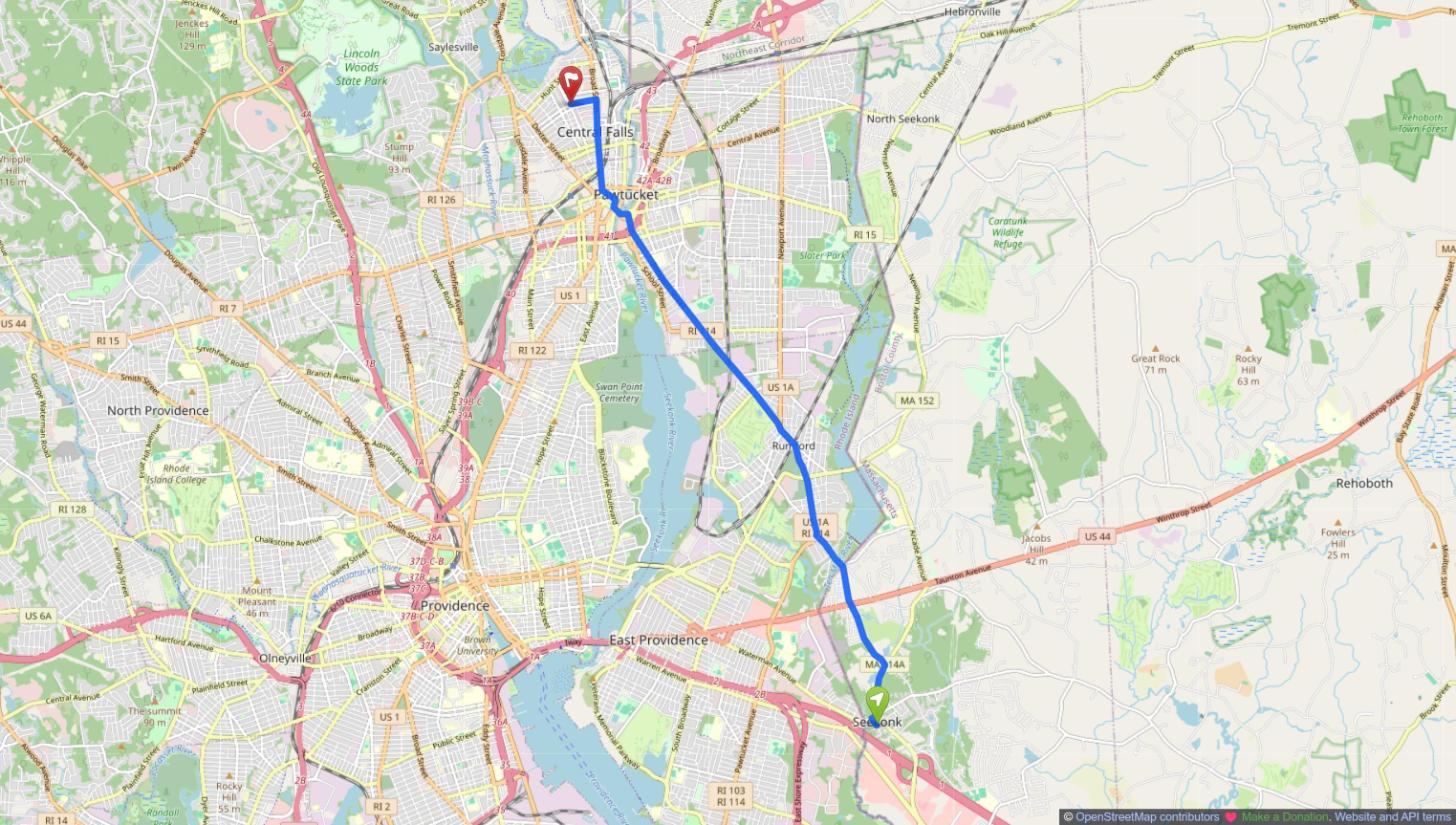
A neighbor four miles away in Seekonk, working nationwide
I am a solo web designer and SEO consultant based in Seekonk, Massachusetts, about four miles from Central Falls. I have been self-employed since 2019, after a long career managing food service and hospitality operations, so I know how a restaurant or a storefront actually runs.
Because I am close, I can meet in person, at your business or anywhere in the local area. I also work with businesses and organizations nationwide. I have served more than 150 of them across the United States and Canada, including a landmark event venue in Seekonk, a national franchise brand and more than 50 lighting companies. You deal with me directly on every project, whether you are on Dexter Street or two time zones away.
Call or text 508-244-0403, or send me a note for a free proposal. I reply within 24 hours.