A working waterfront town on about six square miles
Warren sits on the east bank of the Warren River, across from Barrington, in Bristol County. That county is the smallest in Rhode Island. Warren itself covers roughly 6.1 square miles of land, and the 2020 Census counted 11,147 residents.
A lot is packed into that space. The town was incorporated in 1747 and grew on whaling and shipbuilding, then on textile mills. Brown University was founded in Warren in 1764 before it moved to Providence. The Warren Waterfront Historic District, listed on the National Register in 1974, covers 165 acres of the town center.
The same streets carry the business today. Main Street and Water Street hold the shops, galleries and antiques dealers, and Water Street has a dense run of restaurants within a short walk. Several old industrial buildings downtown have been renovated into workshops, offices and retail space. Hope & Main, a food business incubator, works out of a former schoolhouse. The East Bay Bike Path, 14.5 miles from Providence to Bristol, runs through the middle of downtown. Away from the center, the state lists six villages: Burr Hill, Coggeshall, East Warren, Kickamuit, South Warren and Touisset, where the Audubon Society keeps a 66-acre refuge on the Kickemuit River.
How customers find a Warren business from across the East Bay
Most Warren businesses do not live on Warren customers alone. Diners and shoppers come from Barrington, Bristol, East Providence, Providence, and across the state line from Swansea and the rest of southeastern Massachusetts. Many of them decide where to go before they leave the house.
That changes which searches matter. Google says its local results weigh three things: relevance, distance and prominence. Distance is measured from the searcher, or from the place named in the search. A person in Providence who types "seafood near me" is unlikely to be shown a Warren restaurant. The same person typing "restaurants in Warren RI", "antique shops East Bay" or "things to do in Warren Rhode Island" is asking about the town by name. Those named searches are the ones a visitor-driven business can compete for, and the website and Google Business Profile have to be written for them.
AI assistants work from the same material. When someone asks one to plan an afternoon in Warren, it can only describe a business from what is published in plain text: the address, the hours, what is sold, who it suits. A site that hides those facts in images or a PDF menu gives it nothing to quote.
The other Warrens: why Rhode Island has to be spelled out
Warren is a town or city name in Michigan, Ohio, Massachusetts and other states, and some of those places are far larger. A page that only says "Warren" leaves search engines and AI assistants guessing. Every important page should say Warren, Rhode Island plainly:
"Warren, RI" or "Warren, Rhode Island" in the page title and main heading, not just the town name.
The full street address with the 02885 ZIP code in text on every page, usually in the footer.
LocalBusiness structured data with the complete address and map coordinates.
A Google Business Profile, social profiles and directory listings that all show the same name, address and phone number.
Nearby reference points in the copy, such as Water Street, the Warren River, the East Bay Bike Path, Barrington and Bristol, which no other Warren shares.
Page plans for four kinds of Warren business
I build websites and run search work for small businesses and organizations of many kinds, including nonprofits, real estate offices and professional practices. These four are the ones that give Warren its character, and each needs a different site.
Restaurants, cafes and food producers
I managed food service and hospitality operations for years before I started this work in 2019, so I know what a restaurant needs its website to do on a busy Friday.
Menu pages in text. Real text that loads fast on a phone, with dietary notes, kept current by season. Not a scanned PDF.
Hours and seasonal changes. Summer and off-season hours stated clearly and matched on the Google Business Profile.
Reservations, ordering and private events. One tap from the top of every page, with a separate page for group bookings and catering.
Getting there. Parking, the walk from the bike path, and whether there is waterfront or outdoor seating.
Where to buy. For food producers, a page listing products and where they are stocked or how to order.
Shops, galleries and antiques dealers
What you carry. A page for each category or period you specialize in, with photos of real stock, because buyers search by item, not by store name.
Open days and hours. Stated at the top. Many small shops keep limited days, and a wasted drive loses a customer for good.
Buying and consignment. If you buy or take estates, a page that says what you want and how to reach you.
Online sales, if they fit. A small store on Shopify or built into the site for pieces that ship well.
The rest of the trip. A short note on what else is within walking distance, since most visitors make a day of it.
Makers, studios and workshops
Portfolio by type of work. Separate pages for each product line or kind of commission, with materials and sizes in text.
How commissions and wholesale work. The steps from inquiry to delivery, described plainly, with a form that asks the right questions.
Visiting. Whether the studio is open to the public, by appointment, or only during open studio events, and how to find the door inside a mill building.
The maker. A real About page. Buyers of handmade work want to know who made it and where.
Marine businesses and the trades
One page per service. Hauling, storage, repair, rigging, or for trades each job type, with what is included and what is not.
Service area. The towns and waters you actually cover, each with a page that has real detail. This is where location pages earn their place.
Seasonal deadlines. Launch and haul-out periods, or busy seasons for a trade, with a clear way to get on the schedule.
Proof. Licenses, insurance, photos of finished work and reviews where a customer can see them.
Fast contact. Tap to call and a short quote form. I spent a year inside a lighting company handling sales, scheduling and service calls, so I build these around how the calls really come in.
How a project runs, start to finish
Conversation. We talk about the business, who the customers are and where they come from. I can meet in person in Warren or anywhere in the local area, or by phone or video.
Review. I look at the current site, the Google Business Profile and what shows up for the searches that matter.
Proposal. A free written proposal that lists the pages and the work.
Site plan and content. The page list first, then the words. I can write the content or work from yours.
Design and build. A custom design made for the business, checked on phones before anything else.
Search setup. Titles, structured data, profile fixes and redirects from old addresses so nothing is lost.
Launch and upkeep. The site goes live, and I stay available for maintenance and ongoing search work if you want it.
Questions to ask any web designer before you hire one
Is the design made for my business, or is it a template with my logo dropped in?
Who will actually do the work, and who do I talk to when something needs changing?
Who writes the content, and will it say anything specific about my business and my town?
What happens to my current pages and their search visibility when the new site launches?
Can I make simple updates myself, such as hours, menus and photos?
Which platform do you recommend for me, and why that one?
What will you not promise? Anyone who guarantees a ranking is guessing.
My own answers: every site I build is a custom design, I do the work myself, and I do not promise rankings.
Any platform, including the one you already have
I hold Wix's top partner tier, but I am not a Wix-only designer. I build on Wix Studio, WordPress, Shopify, Squarespace, Weebly and any other builder available to the public, and I pick the platform to suit the business. A shop that ships needs something different from a restaurant.
A rebuild is not always the answer. I can redesign and optimize a site in place, even on an older platform left behind by a previous agency. That is what I did for Tree Medics, a tree health company in Southern Maine.
For businesses with several locations and for franchise brands, I build and manage location pages at scale. I have built more than 30,000 of them, along with the franchise site for Christmas Decor.
Rush timelines for seasonal and deadline work
Warren runs on seasons. A waterfront restaurant, a shop that depends on summer visitors and a boat business each have a date after which a new site does little good until next year. When a deadline is real, such as an opening date or the start of the season, expedited timelines are available. Tell me the date at the start and I will say plainly what can be done by then.
Services for Warren businesses and organizations
Website design, redesign and maintenance on any platform
Local SEO and Google Business Profile work
Programmatic SEO and location pages for businesses that serve many towns
Answer engine optimization and generative engine optimization, so AI tools describe your business correctly
Custom apps and Chrome extensions when an off-the-shelf tool will not do the job
A neighbor in Seekonk, working with clients across the US and Canada
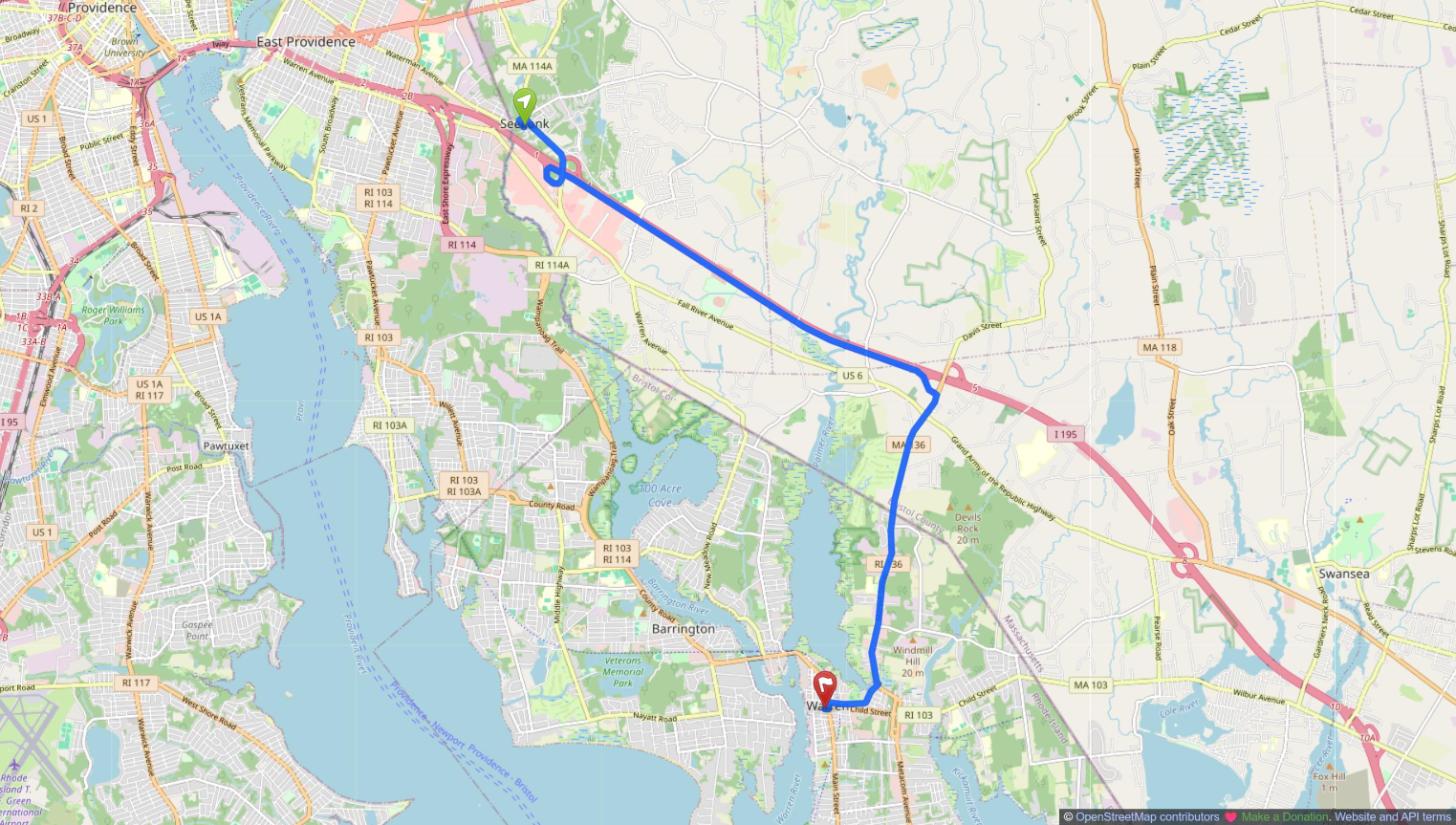
I am based in Seekonk, Massachusetts, about nine miles from Warren, just over the state line. I am happy to meet in person in Warren or anywhere in the local area. My closest local project is Four Echoes at Grist Mill Pond, an event venue in Seekonk.
I also work well beyond the East Bay. I have served more than 150 businesses and organizations across the United States and Canada. You get a nearby neighbor who does this work at a national level, and you deal with me directly.
Call or text 508-244-0403, email joshua@websitedesignma.com, or send me a note through the contact page. I reply within 24 hours and the proposal is free.